

This article let you know What Do We Call Elements That Allow Electricity To Flow? Different atom kinds’ electrons can move about with varying degrees of freedom. The outermost electrons in some materials, including metals, are so loosely bonded that all that is needed to move them excitedly through the space between the atoms of that substance is the effect of room-temperature heat energy.
They are frequently referred to as free electrons since they are essentially unbound and are free to leave their particular atoms and float around in the space between nearby atoms.
What Do We Call Elements That Allow Electricity To Flow? (Do This)
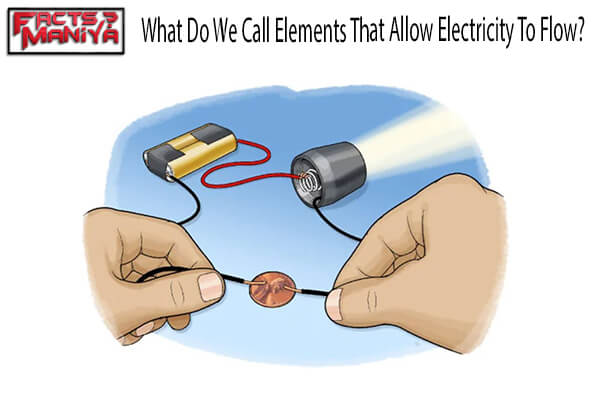
A substance or material that permits the flow of electricity is known as an electrical conductor. Electrical charge carriers, often electrons or ions, travel effortlessly from atom to atom in a conductor when voltage is provided.
What Are Electrical Conductors?
In general, conductivity refers to a substance’s ability to carry heat or electricity. An electrical current flows through a conductor because it provides little to no resistance to the movement of electrons.
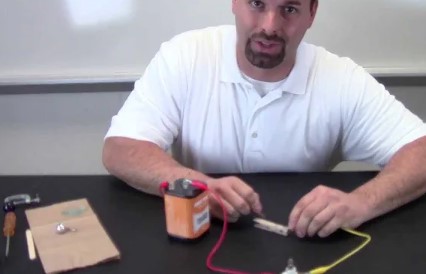
Suitable electrical conductors typically include metals, metal alloys, electrolytes, and even nonmetals like graphite and liquids like water. One of the best electrical conductors is pure atomic silver. The following list of excellent electrical conductors is provided:
- Copper
- Steel
- Gold
- Silver
- Platinum
- Aluminum
- Brass
Since people are excellent conductors of electricity, touching someone who has received an electric shock will also result in the toucher receiving an electric shock. Solid metals molded into wires or etched into printed circuit boards serve as conductors in electrical and electronic systems.
Important Characteristics Of Electrical Conductors
These are some key characteristics of an electrical conductor:
- It guarantees the free passage of ions or electrons through it.
- Its interior has no electric field, allowing free electrons or ions to flow.
- The electric field is parallel to the conductor’s surface outside of it.
- Because of its zero charge density, free charges can only exist on the surface, and positive and negative charges cancel each other out.
Conductors also feature excellent heat conductivity and low resistance. The further point is that a conductor in a magnetic field doesn’t store energy. Finally, the conductor’s ends are both at the same potential. When the potential at one end is altered, electrons can move from one end to the other, and electricity can flow through the conductor.
How Conductors Work?
Solids are said to have a valence band and a conduction band by the band theory of solid-state physics. An electrical current cannot flow through a material if an energy gap exists between its valence and conduction bands. Because these bands overlap in conductors, electrons can move through the substance even when just a small voltage is applied.
The introduction of voltage, an electromotive force, or a temperature action stimulates the outer electrons in the valence band, as a result of which they go from the conduction band to the valence band since their bonds to the atom are so weak.

These electrons have complete freedom to roam anywhere in the conduction band where they are insignificant. These electrons don’t go in a straight line; they move back and forth. For this reason, their speed is referred to as drift velocity or VD.
This drift velocity is why electrons clash with material atoms or other electrons inside the conductor’s conduction band. Electrons go from the point of lower potency to the point of higher potency when there is a potential difference in the conductor between two places. Electricity flows in the opposite direction from electrons. The conductor material offers only minimal resistance in this case.
Types Of Conductors
As was already indicated, when the combined factors of cost, conductivity, tensile strength, weight, etc., are taken into account, aluminum conductors outperform copper conductors. Due to their lower cost and lighter weight, aluminum conductors have replaced copper conductors in overhead power lines.
Even though an aluminum conductor has a bigger diameter than a copper wire of equal resistance, this is a benefit when “Corona” is considered. With a rise in conductor diameter, the corona significantly decreases. The four common overhead conductor types used for overhead transmission and distribution to transport produced power from producing plants to the end customers are listed below.
Generally speaking, all conductor types are stranded to maximize flexibility. Except for tiny cross sections, solid wires are complicated to handle, and since they swing in the wind, they often crystallize at the point of support.
- All Aluminium Conductor (AAC)
- All-Aluminum-Alloy Conductor (AAC)
- ACSR stands for Aluminum Conductor and Steel Reinforced.
- ACR stands for Aluminum Conductor, Alloy Reinforced.
- AAC: All Aluminium Conductors;
This type is also sometimes known as ASC (Aluminium Stranded Conductor). It is constructed of aluminum electrical conductor grade, or EC grade, strands. The conductivity of an AAC conductor is 61% IACS (International Annealed Copper Standard).
AAC has a limited application in transmission and rural distribution lines and has excellent conductivity due to its comparatively low strength. Urban locations, where spans are typically small but better conductivity is necessary, can use AAC for distribution.
AAAC: All Aluminium Alloy Conductor
Aluminum alloy 6201, a high-strength Aluminum-Magnesium-Silicon alloy, is used to make these conductors. This alloy conductor combines improved mechanical strength with solid electrical conductivity (approximately 52.5% IACS).
AAAC can be distributed since it is less heavy than ACSR of equivalent strength and current capacity. It is not typically favored for transmission, though. Additionally, due to their outstanding corrosion resistance, AAAC conductors are suitable for usage in coastal areas.
ACSR : Aluminium Conductor, Steel Reinforced
A spiral-wrapped layer or layers of high-purity aluminum (aluminum 1350) wires make up an ACSR, with a solid or stranded steel core as its base material. The core wires might be steel coated with zinc (galvanized) or aluminum (aluminized).
Thin coatings of galvanization or aluminization are applied to steel to prevent corrosion. Additional mechanical strength is provided by the center steel core, which also reduces sag relative to all other aluminum conductors.
The steel percentage of ACSR conductors ranges widely, from 6% to 40%. Where greater mechanical strength is required, such as a river bridge, ACSR with a higher steel composition is chosen. The use of ASCR conductors is standard for all transmission and distribution needs.
Aluminium Conductor, Alloy Reinforced
The aluminum-Magnesium-Silicon alloy (6201 aluminum alloy) core is wrapped with high-purity aluminum (aluminum 1350) strands to create an ACAR conductor. Compared to equivalent ACSR conductors, ACAR offers superior mechanical and electrical qualities. Both overhead transmission and distribution lines can use ACAR conductors.
Bundled Conductors
When only one cable per phase is utilized, transmission at very high voltages (say above 220 kV) might cause severe corona loss and excessive interference with surrounding communication lines. This is such that corona loss and interference issues can be caused since the surface electric field gradient of a single wire operating at EHV is sufficient to ionize the air around it.
The electric field gradient can be significantly decreased by using two or more conductors per phase nearby. Bundled conductors are two or more conductors per phase that are joined at regular intervals by spacers. Two conductors are shown bundled together in each phase in the figure to the right. For increasing voltages, the number of conductors in a bundled conductor increases.
Conclusion
I hope you now understand the various conductor types utilized in transmission lines and What Do We Call Elements That Allow Electricity To Flow? We have learned about other types of conductors, including bundled and AAC, AAAC, ACSR, and ACAR.
Frequently Asked Questions
Why is it essential to have conductors?
We can make an electrical route for the electricity to travel through with these conductors. As a result, conductors are crucial to daily living. As electric current can cause lethal burns, direct contact with electrical circuits can be fatal.
What are the basic properties of conductors?
The flow of electrons and ions via a conductor is constant. Since there is no electric field inside a conductor, electrons can move around freely. Inside a conductor, the charge density is zero. Free charges are only present on the conductor’s surface.
Which conductor is mainly used?
Initially, copper was typically used as a conductor for transmission lines, but aluminum conductors have completely supplanted copper due to their lower cost and lighter weight compared to copper conductors of the same resistance.
What are poor conductors used for?
The handles of cooking equipment are made from materials that are poor heat conductors. In iceboxes and refrigerators, glass and wool foam are used to block the entry of heat from the outside.
